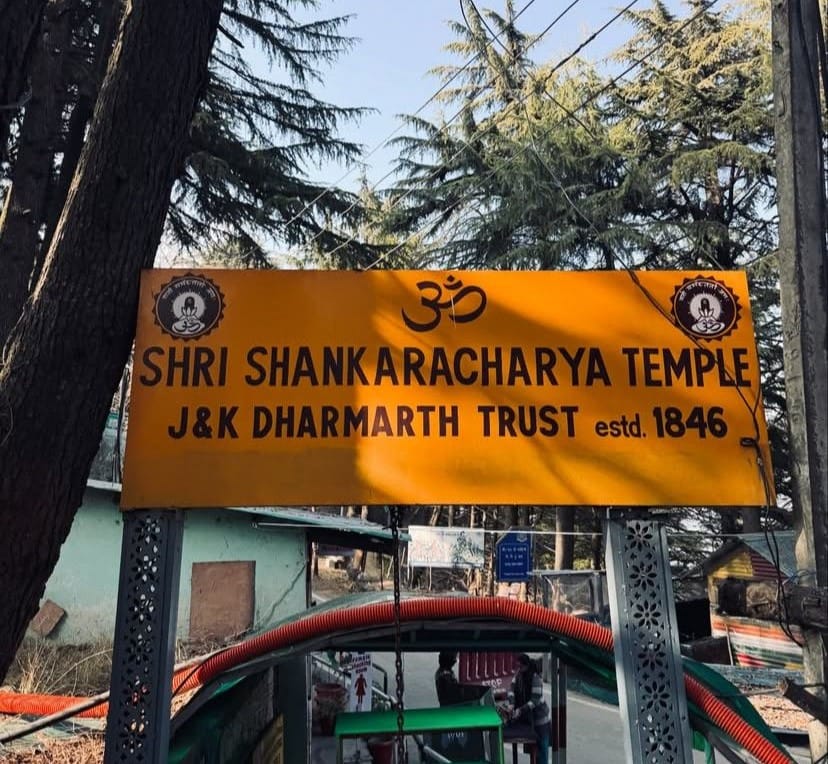
The Shankaracharya Temple is located on a hilltop of Srinagar. It gazes in silence upon the city as it has done so for centuries.
It is also known as Jyeshtheshwara Temple among the locals. Some call the hill Takht-e-Suleiman. But to most travelers, it is the Shankaracharya Temple.
This is a temple located high above Srinagar. It therefore ensure the best views in Kashmir. You’ve got a view of Dal Lake, the old city and the Zabarwan hills. Plus, you instantly feel an intense calm when you reach the top.
This blog will tell you everything you need to know. You will read about its history, architecture, spiritual significance, travel advice and the experience of visiting. What’s more, you will realize why this temple stakes such a claim in the heart of Kashmiri culture.
Location and Setting
The temple is situated on Shankaracharya Hill. The hill juts up about 1,000 feet from the floor of the valley. So you will need to climb up some steps to make it to the temple.
The road twists through wooded ridges. Then too, you have encounters with security check posts. Authorities maintain tight security here. But the mood is still relaxed.
The temple overlooks Dal Lake. Therefore, photographers love this spot. You can visit during sunrise. You can also go near sunset. Both times offer dramatic views.
On clear days, one can view the Pir Panjal range. Plus, the entire city of Srinagar fans out beneath you. The height contributes to the spiritual atmosphere. You’re isolated from all the noise and distraction.
Historical Background
Historians are said to date the temple from antiquity. Although it is widely believed that the 3rd century BCE King Gopaditya constructed this fortress. However, scholars debate this claim. Some say that later rulers reconstructed it.
The temple is named after Adi Shankaracharya. He travelled to Kashmir on the 8th century. So people relate this shrine with his inner voyage.
Hindu philosophy revival: Adi Shankaracharya is credited to have revived Hindu philosophy. Godavari also founded Advaita Vedanta in India at large. His trip to Kashmir was memorable spiritually.
Local lore has it that he meditated here. So followers of Dattatreya consider the hill holy. This link between the philosopher and the temple was a growing one.
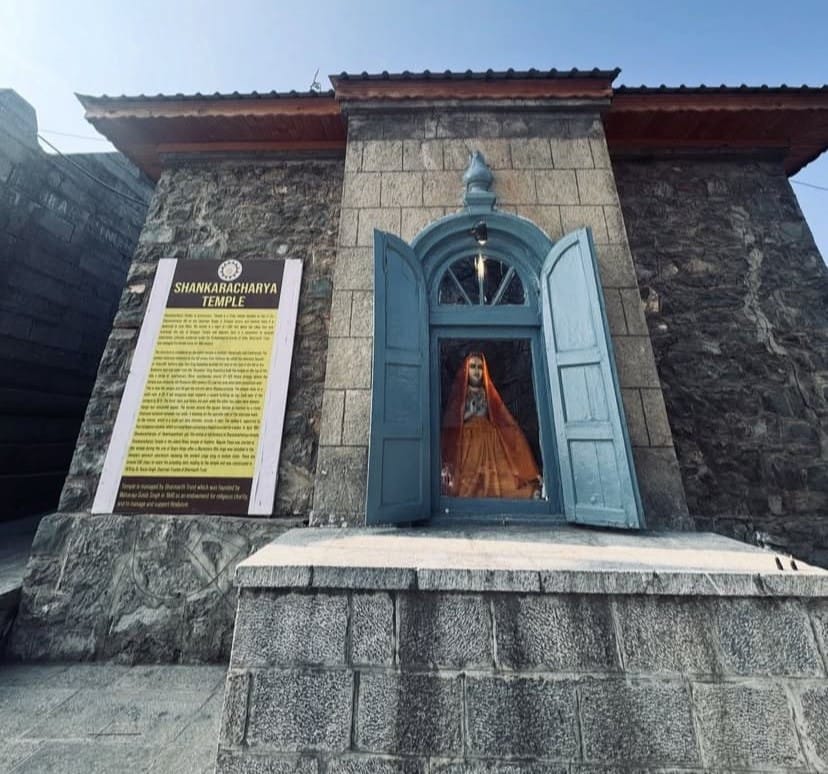
The site also speaks to Kashmir’s complex history. Various rulers governed the region. Furthermore, each period made its imprint. It had been molded by Hindu kings, influenced by Buddhism, and ultimately governed by Muslim rulers centuries later.
The temple had an afterlife, despite political sea changes. So it turned out to be something of a symbol of continuity.
Architectural Design
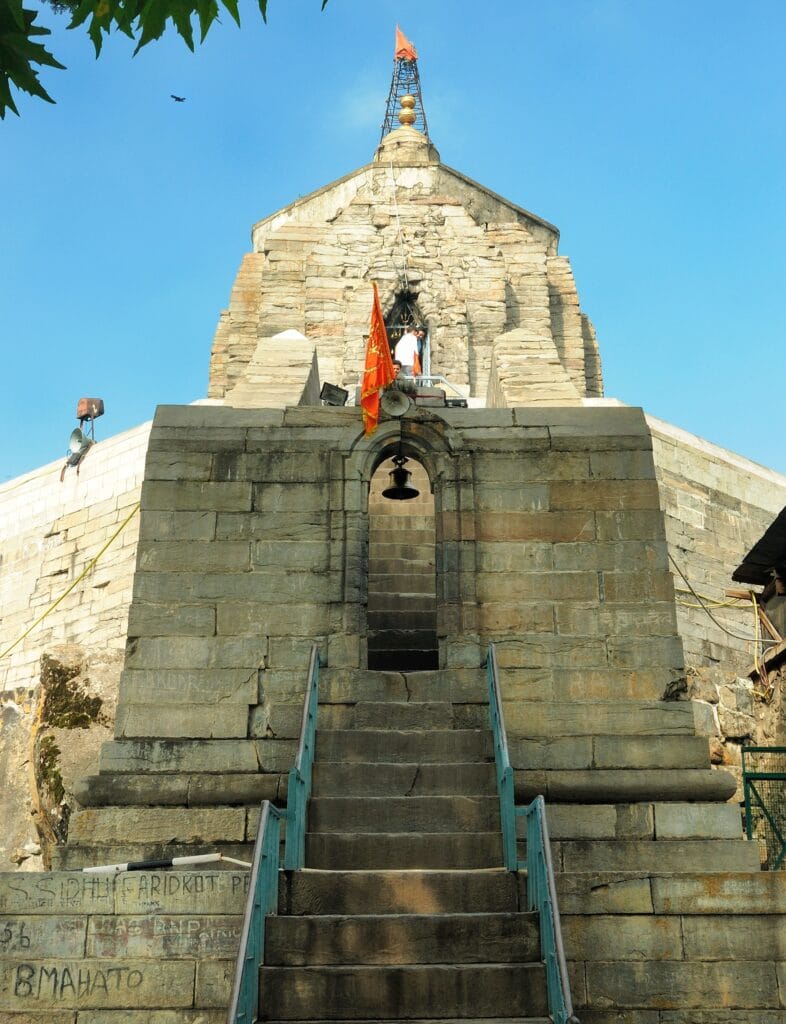
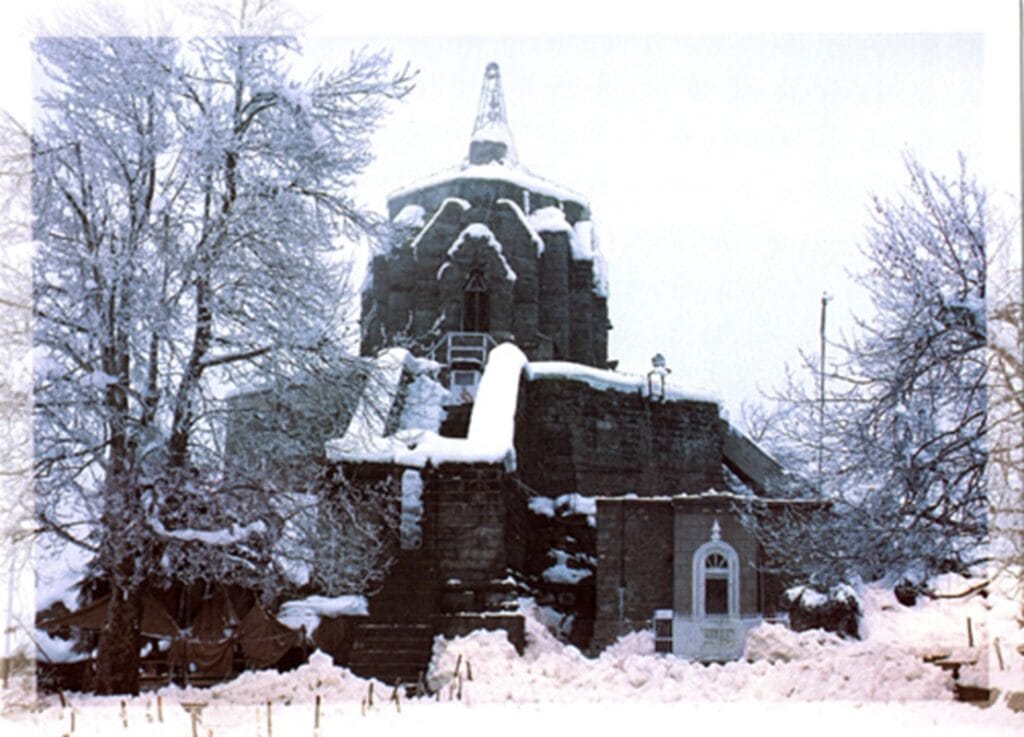
The temple has a straightforward, robust architecture. It has somewhat less elaborate ornament than the Muqarnas. Instead, it’s built from massive stone blocks.
The building stands on a raised octagonal podium. Hence it is that the temple has a wonderful domination of its mountain base. Builders used large limestone slabs. And they targeted them well, too.
A series of stone steps lead up to the main shrine. Visitors climb nearly 240 steps. Hence, the ascent is part of the spiritual adventure.
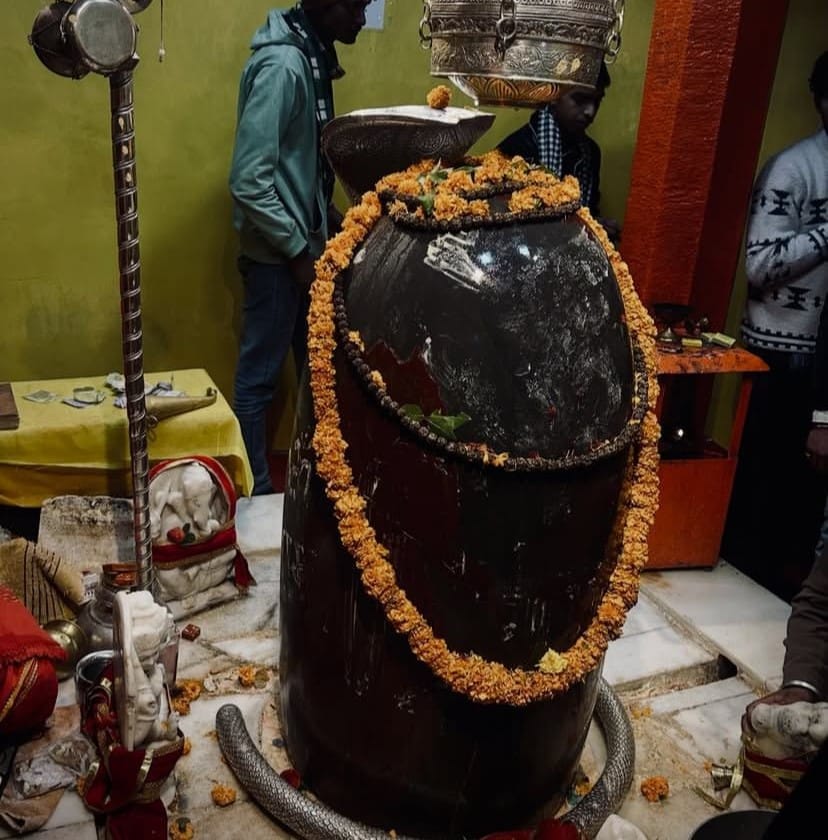
In the sanctum, a Shiva Lingam is preserved. Devotees worship Lord Shiva here. The inner chamber feels small. But it also have a sense of willfulness and intention.
You won’t see intricate carvings that you may be used to in South Indian temples. Instead it is in early-Kashmiri style. And the strength is emphasized over decoration in structure as well.
It is also constructed so you can see through all the sides. As such, the temple appears as a watchtower over the valley.
Spiritual Significance
Followers regard this as one of the most sacred places in Kashmir. It is not a related link, it goes directly to Lord Shiva. It is also linked to the heritage of Adi Shankaracharya.
This is a hill that pilgrims mount in devotion. Ergo, the path is meaningful in and of itself. The climb demands effort. Plus, there is a sense of relinquishing in the height.
Considering this as one, there is a rush to Theetha during Maha Shivratri. The festival draws large crowds. In addition, inside the shrine special prayers are conducted.
The temple is also a magnet for spiritual seekers. They come for meditation. They seek silence. And they like all the panoramic isolation.
You will feel a great deal of energy in the head. The wind moves softly. The city noise fades away. So you are having clarity and silence.
View from the Top
The view alone is worth it. For this reason this temple is visited by many tourists on their way through Srinagar.
Dal Lake glitters below. Houseboats float quietly. Also shikaras don’t move fast through the water.
The old city is in the background. You may see some of the bridges that cross the Jhelum River. And the green Zabarwan hills that form the horizon.
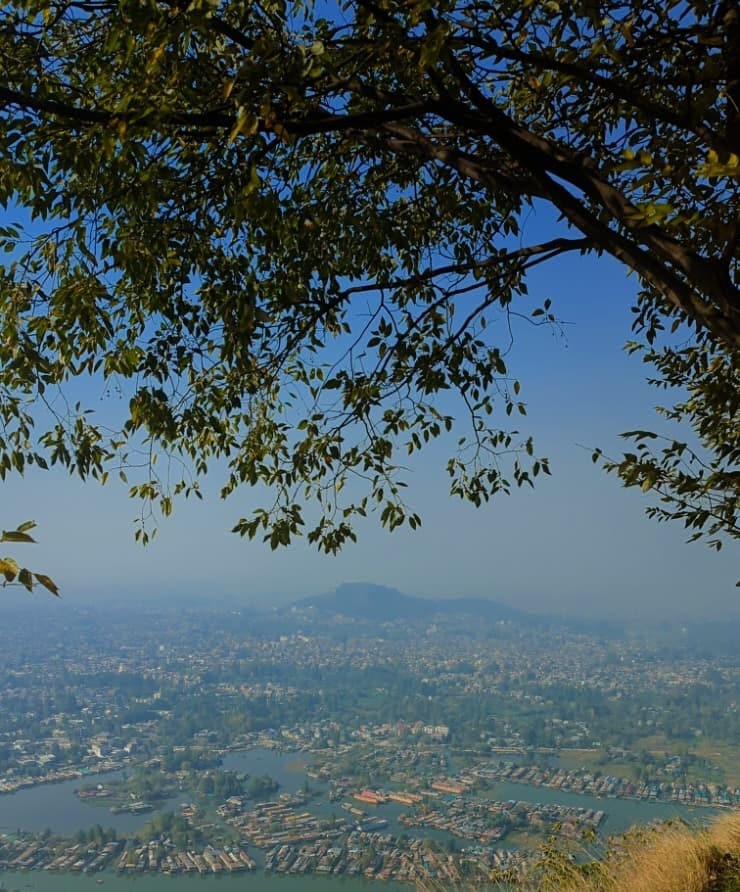
During autumn, trees turn golden. Therefore, the valley looks magical. The tops of the mountains are snow-covered in winter. Plus, the air is so refreshing and clean.
Photographers will often wait for golden hour. The light changes quickly. So, you need to set up your camera ahead of time.
Security and Entry Guidelines
Heavy security is enforced by the authorities in the temple. For this reason, you must obey rules meticulously.
You can take the mobile phones till a certain point. Security personnel check bags. And, they may require you to deposit electronics at the door.
Technically, vehicles cannot be driven all the way to the top. So you need to walk the rest of the way. A walk most people can handle.
The temple is open at certain hours of the day. In addition, access may be restricted by the authorities for special events or security reasons. So make sure to check local updates before you plan your trip.
Though the process tends to run smoothly, it works with a degree of limitation. Moreover, staff guide visitors politely.
Best Time to Visit
You can come any time of the year. But each season is unique.
Spring brings fresh greenery. Therefore, the hill looks vibrant. Summer offers clear skies. Moreover, mornings remain pleasant.
The valley it paints carries the warm color of Autumn. Therefore, photographers love this season. The snow and cold winds of Winter approach. However, the view looks dramatic.
Visit early in the morning. You will avoid crowds. And you will be a bit more cooler. Evening visits also work well. But, owing to security timings late access may be restricted.
How to Reach Shankaracharya Temple?
The temple is located 8 km from downtown Srinagar. Hence, taxi can take you there very easily. It’s a familiar route to local drivers. In addition, most hotels can organize transport.
If you are staying close by i.e. around Dal Lake, it will take 20–30 minutes. And you also can fit in a lake trip with the visit.
Public buses don’t go directly to the hilltop. So that the taxis are still the best.
Cultural Importance in Kashmir
The temple is more than just a religious venue. It symbolizes Kashmir’s ancient heritage. It also reflects the spiritual diversity of the region.
Kashmir was itself one of the greatest seats of learning. Scholars debated philosophy here. So the temple mirrors that intellectual tradition.
The connection with Adi Shankaracharya is also adding strength to this portrayal. He journeyed through all of India to unite spiritual thought. And then his visit put Kashmir squarely on that journey.
The temple has also lent its name to local legends and folklore. Among the elders, stories circulate about the hill. So, it is still in the memory of the community.
Experience of Climbing the Hill
The ascent starts with stone steps. You move slowly. Moreover, you feel the altitude.
Trees line the path. Birds chirp softly. Therefore, the journey feels calming.
Security checkpoints appear at intervals. But they don’t mess with the vibe.
It takes consistent effort to get there, but you reach the top. So you still feel like you’re accomplishing something.
Within the sanctum, priests perform ritual. Bells can be heard ringing in the air. Besides this, incense contributes to the consecrated mood.
You take a few quiet minutes. Plus, you take in the view. Then you descend slowly.
Nearby Attractions
That visit can be combined with other Srinagar sights.
You can explore Dal Lake. You can take a shikara ride. Additionally, you can sleep on a houseboat.
Visit Mughal Gardens. These gardens display Persian-style layouts. So, they provide a quite afternoon walk.
You may also visit Hazratbal Shrine. This mosque is situated close to Dal Lake. It’s also deeply religious to the Mormons.
Each site presents a different face of Kashmir. So you get this balanced view of the region.
Photography Tips
It ain’t possible to bring professional cameras in the inner area without permission. Therefore, confirm guidelines beforehand.
Shoot wide with the designated angles. Moreover, use natural light wisely.
Morning light creates soft shadows. Evening light adds warmth. Therefore, plan your timing carefully.
Avoid crowded hours. You will get cleaner frames. And also, you will be more agile.
Practical Travel Tips
- Wear comfortable shoes. The steps demand steady footing. Therefore, avoid slippery soles.
- Carry water. But here’s the thing: Security checks mean you need to keep those bags light.
- Respect local customs. Take off your shoes as you enter this shrine. Moreover, dress modestly.
- Do not rush. Spend time at the viewpoint. So, you’ll love the environment.
Why Shankaracharya Temple Matters Today
Modern Srinagar grows rapidly. Buildings rise. Traffic increases. However, this temple remains steady.
It harks back to the ancient history of Kashmir. It also bridges the past to the present.
Tourists visit for views. Devotees visit for blessings. And the temple plays more than one function.
It stands as a landmark. And it’s a spiritual haven as well.
Final Thoughts
Shankaracharya Temple is not majestic or splendid. Instead, it relies on presence.
The hill, the stone building and the open sky make a strong experience. So you put it into perspective as you leave.
If you are visiting Srinagar, this temple should be on your list. Also, see it early in your trip. The sight will set the stage for the rest of your trip.
Shankaracharya Temple offers history, religion, architecture and panoramic view combined in one. As such, it is one of the major landmarks of Kashmir.
Climb the steps. Stand at the top. Look over the valley. You will see why this temple keeps attracting crowds after all those years.
FAQs related to Shankaracharya Temple – Srinagar, Kashmir
Where is Shankaracharya Temple located?
Shankaracharya Temple stands on Shankaracharya Hill in Srinagar, overlooking Dal Lake.
Devotees worship Lord Shiva in the form of a Shiva Lingam inside the sanctum.
The temple offers panoramic views of Srinagar. Moreover, it holds deep spiritual significance due to its association with Adi Shankaracharya.
Visitors climb around 240 stone steps to reach the main shrine.
Early mornings work best. Therefore, you avoid crowds and enjoy clear views.
No, authorities do not charge an entry fee for visiting the temple.
Security rules restrict mobile phones beyond certain checkpoints. Therefore, visitors may need to deposit them.
The temple usually opens in the morning and closes by evening. However, timings may change due to security or weather conditions.
The temple lies about 8 kilometers from Dal Lake and central Srinagar.
Vehicles can reach near the entrance. However, visitors must climb steps to reach the shrine.
Many historians credit King Gopaditya with building the temple in ancient times. However, later rulers renovated it.
Locals use the name Takht-e-Suleiman due to historical and cultural influences during different ruling periods.
The temple reflects early Kashmiri stone architecture with a simple and strong design.
Photography remains restricted in inner areas. Therefore, visitors should follow security instructions.
Devotees gather in large numbers during Maha Shivratri for special prayers and rituals.
The climb requires moderate effort. Therefore, elderly visitors should move slowly and take breaks.
Yes, tourists from all backgrounds can visit. However, everyone must follow temple rules and dress modestly.
The temple connects strongly to Lord Shiva. Moreover, its link to Adi Shankaracharya adds philosophical significance.
Most visitors spend 1 to 2 hours, including the climb and sightseeing.
Authorities maintain strong security. Therefore, the temple remains safe for visitors.
Visitors should wear modest clothing and comfortable shoes suitable for climbing steps.
Yes, families often visit together. However, parents should supervise children during the climb.
Yes, the temple offers sweeping views of Srinagar city, Dal Lake, and the surrounding mountains.
Basic facilities exist near the entrance area. However, visitors should carry essentials like water.
The temple combines history, spirituality, and breathtaking views. Therefore, it stands as one of the must-visit landmarks in Srinagar.
Comments