If raw wilderness is what you love, then it has to be Dachigam National Park. It is nestled quietly on the approaches to Srinagar. Moreover, it feels far away from city noise even though it is just a short drive from the center.
The Dachigam National Park is one of the Significant Wildlife Reserve of North India. It extends over dense forests, alpine meadows and rocky precipices. So it forms a self-contained Himalayan ecosystem in a single spot.
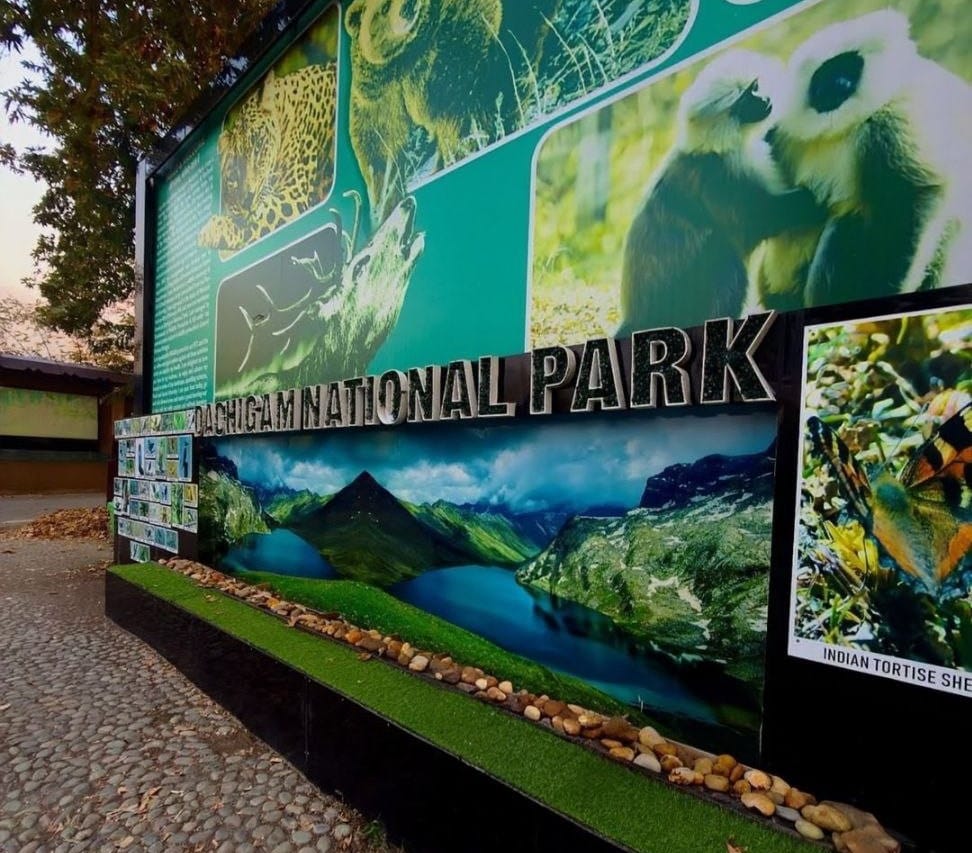
The rare Hangul deer are popular attraction of this park. But it’s not just one animal. It is also about rivers, birds, predators and silent valleys. If you are thinking about your trip to Kashmir, then definitely consider visiting Dachigam. And if you’re a wildlife photographer, this place is gold. In this post, I’ll go on to tell you why it is so popular, its history, what there is to see inside of it, how to get around when you are here, ticket times and rates as well as transportation.
Dachigam National Park – Why it’s so popular?
Dachigam is best known for one thing. It is the last stronghold of the Hangul.
The Hangul, also known as the Kashmir stag, is a critically endangered species of red deer. Its scientific name is Cervus hanglu breviceps. Also, it occurs nowhere except Kashmir. At one time, thousands of Hangul used to roam the valley. But their numbers have dwindled because of habitat loss and hunting. The valley became critical for their existence. Hangul are closely monitored by conservation teams today. In addition, researchers in wildlife visit frequently to observe their breeding and movement patterns. The Dachigam is also renowned for its flora and fauna. It is home to leopards, Himalayan black bears, musk deer and wild boars. And, there are more than 150 types of birds you can catch sight of here. Its popularity is also due to its close proximity to Srinagar. It is located about 22 km from the city centre. So tourists can visit without lengthy journeys. And then there is the landscape itself, which visitors want to see. The lower part of Dachigam is made up of grassy meadows with slopes. Upper Dachigam is alpine scrub with snow clad peaks. The trout-filled streams are the park’s other claim to fame. The Dagwan River flows through it. Thus, the ecosystem is still fertile and healthy.
History of Dachigam National Park
The name “Dachigam” comes from the Kashmiri meaning ‘ten villages.’ The name is taken from ten villages which had to be shifted and removed for preparing the protected area. Its ground was once a game reserve of the Maharaja of Kashmir. In 1910, it was established by the Dogra kings. In addition, the forest was conserved primarily to ensure clean drinking water supply in Srinagar. The Dagwan River is the source of water supply to the city. This also meant that by protecting this forest, Srinagar’s water source was being defended too. The region fell under greater legal protection following independence. In 1951, it was announced as a wildlife sanctuary. It became a national park in 1981. There have been more attempts at conservation ever since. Furthermore, the emphasis became on protection of wildlife than royal hunting. Hangul numbers declined sharply in the 1970s. So special breeding and habitat restoration programmes began. Today, Dachigam is a monument of conservation in Kashmir.
Geography and Landscape
Dachigam extends over an area of around 141 square kilometres. But its topography changes dramatically within that region. The park is separated into two areas. Lower Dachigam is about 1,700 meters above sea level. The Upper Dachigam is higher than 4,000 m.So you have different climates within one park. Lower Dachigam is open for most of the year. It has also thick oak, maple, and pine forests. In winter, Upper Dachigam is closed. Snow covers the higher altitudes. Therefore, access becomes difficult. The Dagwan river runs through the park. It originates from Marsar Lake. It also acts as a habitat for fish and other aquatic organisms.
Wildlife Inside Dachigam National Park
Wildlife is at the core of Dachigam. And every season brings new sightings.
Hangul (Kashmir Stag)
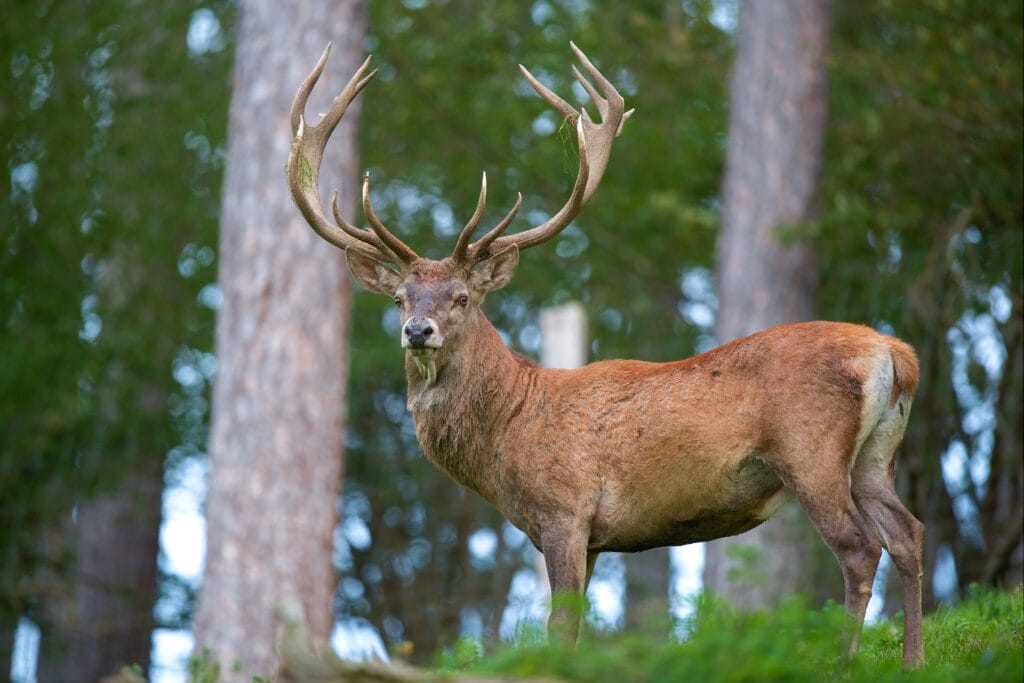
The star attraction is the Hangul. It has enormous antlers and a chestnut coat. By the way, the males have cool antlers during rutting season. In the wee hours, you will find them mainly in Lower Dachigam. However, sightings require patience.
Himalayan Black Bear
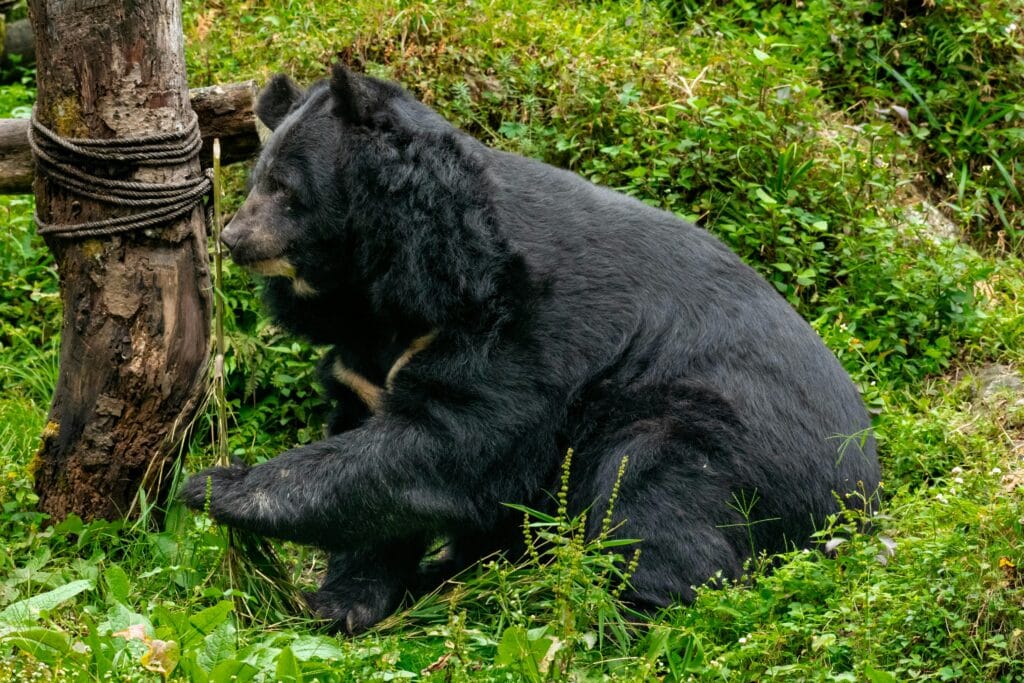
These bears have a broad range over the park. They also migrate to lower levels during fruiting. They are occasionally seen along forest margins by visitors. However, maintaining distance is important.
Leopards
Dachigam is home to leopards, but are rarely spotted. Therefore, sightings are rare. Camera traps have confirmed their presence, though. They also contribute to the ecological equilibrium.
Musk Deer and Other Mammals
Musk deer inhabit upper regions. Wild boars and langurs are also abundant here. Additionally Himalayan weasels and jackals contribute to this diversity.
Birds of Dachigam
Birdwatchers love this park. Spring and summer are the prime times for bird activity. Keep an eye out for Himalayan monal, golden eagle and koklass pheasant. Migratory birds also come at different seasons. Therefore, keep binoculars ready.
What to Do Inside Dachigam National Park?
Dachigam is not a safari park. You are not going to see a parade of jeeps like in other reserves. But that’s what makes it more peaceful.
Nature Trails
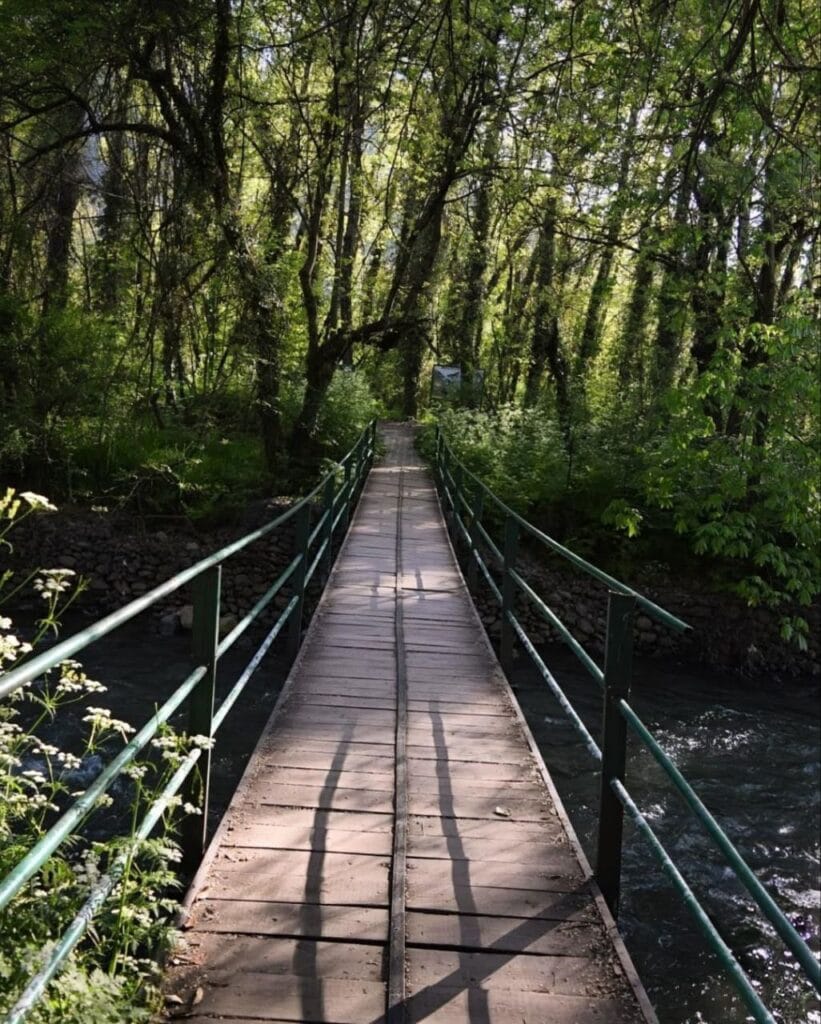
Lower Dachigam has walking trails. In addition, forest guards keep visitors to a regulated path. You are walking by streams and underneath tall trees. Therefore, the experience feels immersive.
Trout Streams
The Dagwan stream flows gently. And its crystal clear water makes a splash with photographers. Fishing is restricted. But there is something soothing about looking at trout swimming in crystalline water.
Viewpoints
Some have panoramic views from high places. You can even see snow-covered peaks in the distance. Early morning mist adds drama. Therefore, sunrise visits feel magical.
Marsar Lake (Upper Dachigam)
The Marsar Lake is located in the Upper Dachigam. But special permission and trekking are required to reach it. In winter, the lake freezes up. And it’s gorgeous in the summer!
Best Time to Visit Dachigam
Each season offers something different.
Spring (April to June)
Spring is ideal. Plus flowers bloom and animals come out of hibernation. Hangul-sightings get better at this time. That’s why most tourists travel here in spring.
Summer (July to September)
Summer remains pleasant. In addition, greenery remains fresh following rains. Bird activity also increases. Still, some hit-or-miss showers could disrupt plans.
Autumn (October to November)
Autumn colors transform the forest. The yellowing leaves are a beautiful sight. Wildlife sightings continue. Therefore, photographers love this season.
Winter (December to March)
Lower Dachigam stays open. However, snowfall may restrict movement. Upper Dachigam closes. That means winter visits concentrate on lower trails.
How to reach Dachigam National Park
Reaching Dachigam is simple.
By Air
The closest airport is Sheikh ul-Alam International Airport. It is linked with the major Indian cities. In addition, taxis from the Airport takes 45 minutes to get to Dachigam.
By Train
The nearest railhead is the Srinagar Railway Station. But there is less train connectivity than some major Indian routes. Alternatively, tourists take the train to Jammu Tawi Railway Station. From there, they make the four-hour drive to Srinagar. So road travel is all part of the experience.
By Road
Dachigam is about 22 km from Srinagar. You can hire a taxi. Besides, private cars can easily get to the entrance. Road conditions usually remain good. But access may be limited in the winter due to heavy snow.
Ticket Pricing and Entry Details
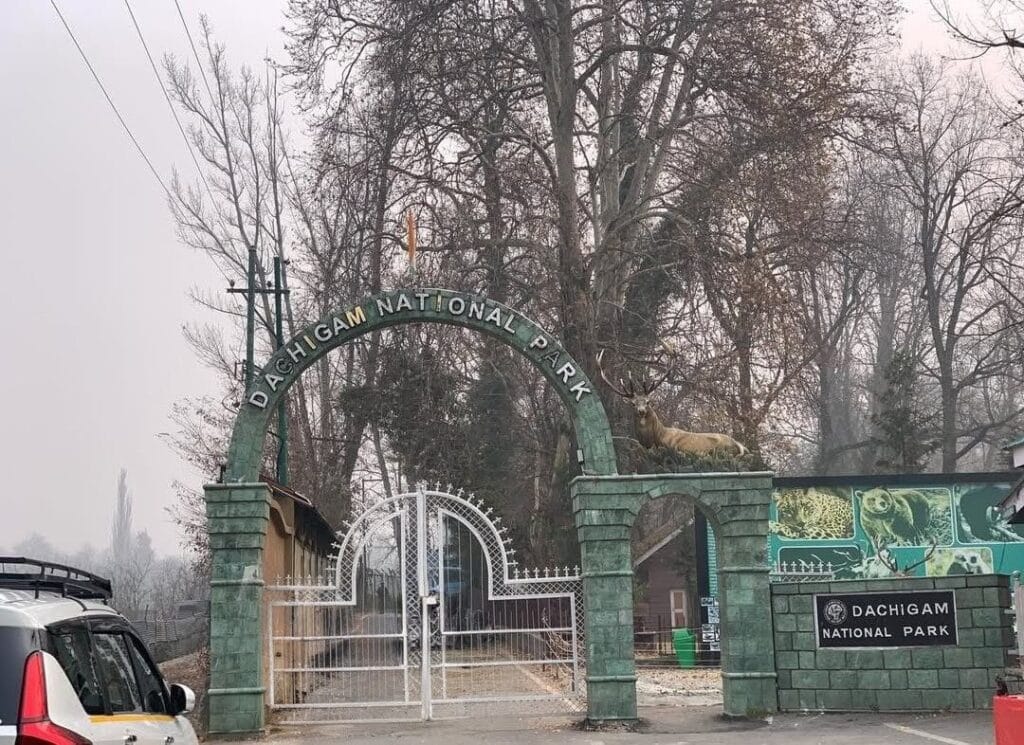
Entry fees may change. Therefore, always confirm before visiting.
As of recent estimates:
- Indian tourists: Around ₹100 per person
- Foreigners: Around ₹500 per person
- Camera fee: It is not included in the cost & should be paid by customer directly at site.
- Vehicle entry: If permitted, separate fee applies
The park is open 9 AM to 4 PM. However, timings may vary seasonally. You must carry a valid ID. In addition, authorities can limit the number of daily visitors. Upper Dachigam requires special permission. Therefore, contact the wildlife department beforehand.
How to book Dachigam National Park Tickets?
Here is a Step by step guide on how to book tickets for Dachigam National Park from official Government website called JKwildlife.com
Step 1: Go to the only official government website https://jkwildlife.com/dachigambooking/portal/front/availability.asp after opening the link there will be a button called “Check Availability” Click on it
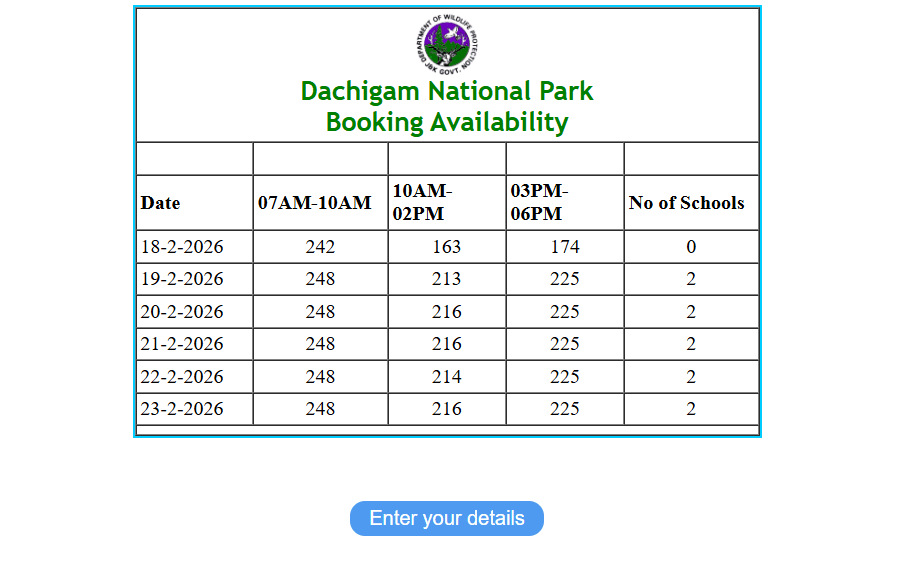
Step 2: A booking availability table will showup click on “Enter your details”
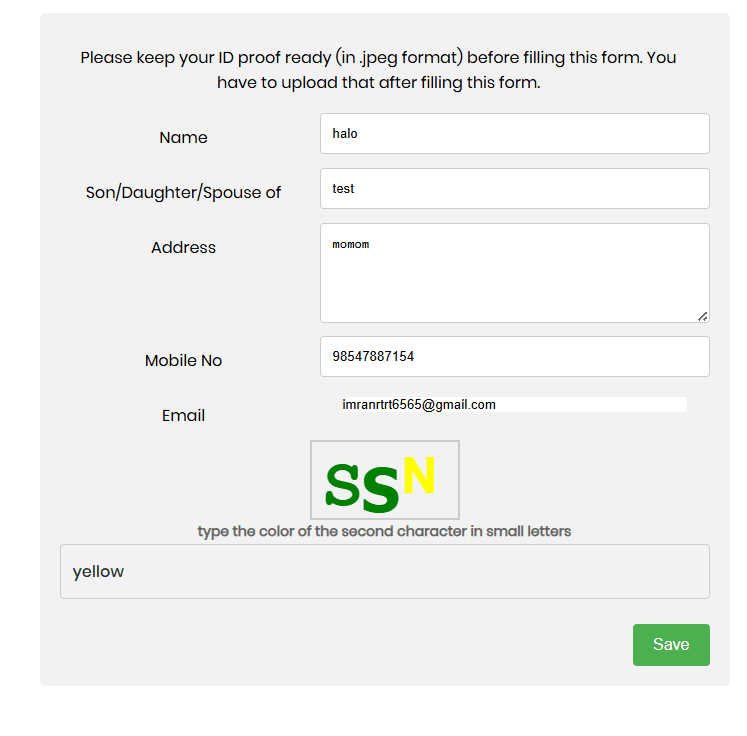
Step 3: Dachigam Online booking portal will open, Fill the form with your details and click on “Save”
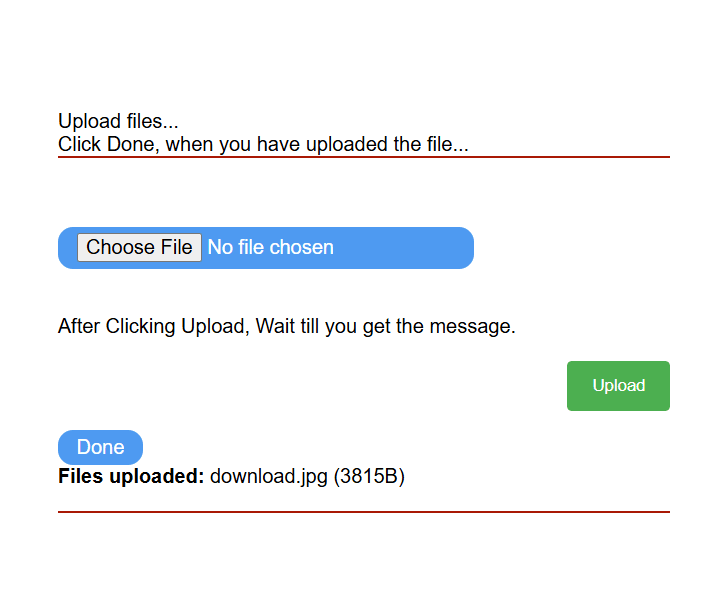
Step 4: Upload ID proof and click Upload

Step 5: Fill details like date of visit, time slop, category , no of persons above 10, no of childern and nationality and click on “Save and Pay”
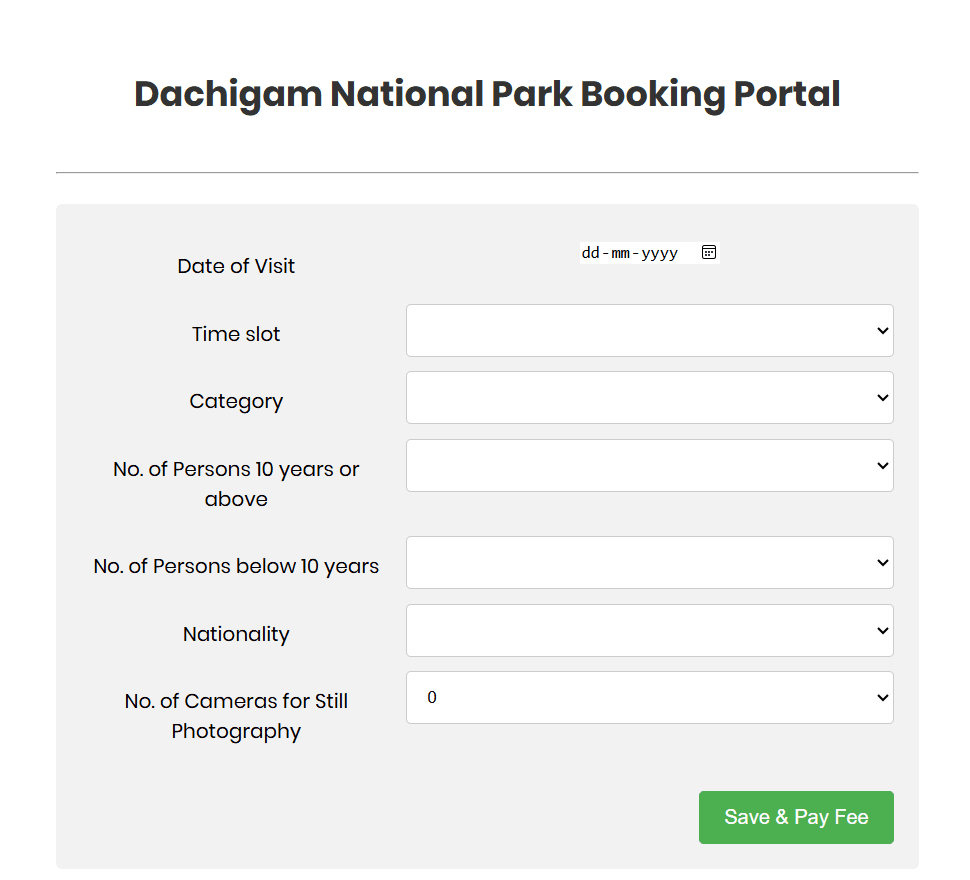
Step 6: Download the ticket it will be sent to your email.
Local and Private Transport Options
You have multiple transport choices.
Local Taxis
Srinagar has many taxi operators. Besides, drivers are pretty familiar with Dachigam routes. You can book half or full-day trips. Therefore, flexibility remains high.
Private Cab Rental
Private cabs can be booked through travel agencies. Also, hotel staff usually organize them. Prices depend on vehicle type. But ₹1500 – ₹3000 should suffice for a return journey.
Self-Drive Cars
Some tourists prefer self-drive cars. Also, the roads leading to Dachigam are easy. But need to contact in advance for parking availability.
Public Transport
Public buses will not take you straight to the park entrance. But you can catch a bus in the direction of Harwan and hire a local cab. So, this is for budget travelers.
Travel Tips for Visitors
Arrive early in the morning. Wildlife activity peaks at dawn. Accordingly, the likelihood of sight increases by visiting early. Wear comfortable walking shoes. And, bring water and some light snacks. Do not litter. Therefore, respect forest rules. Avoid loud noises. Moreover, silence improves wildlife encounters. Carry binoculars. They are useful in detecting distant animals.
Safety Guidelines
Follow instructions from forest guards. Moreover, stay within marked trails. Do not approach animals. Therefore, maintain a safe distance. Don’t go alone in deserted places. Moreover, group visits feel safer.
Nearby Attractions
You can club Dachigam with other Srinagar spots. Visit Shalimar Bagh. Moreover, explore Nishat Bagh. You can also lounge by Dal Lake. So a day long itinerary becomes convenient.
Why Dachigam Matters Today?
Dachigam is not only a place for tourism. It is a conservation lifeline. The Hangul depends on it. And, of course, Srinagar relies on its water system. Climate change threatens Himalayan ecosystems. Thus, sanctuaries of this nature such as Dachigam are important. When you make responsible visits, you support conservation without realizing it. Moreover, eco-tourism creates awareness.
Final Thoughts
Real wilderness can be experienced in Dachigam National Park. It makes no guarantees about seeing them. However, it delivers authentic nature. It protects rare species and also maintains the ecological balance of Kashmir. It lies close to Srinagar. Therefore, access remains easy. If you want peace, go to Dachigam. If you are a wildlife enthusiast, head to Dachigam. Moreover, if you respect nature, you will appreciate its silence.
Plan well. Travel responsibly. So, that Dachigam lives like wilderness for future generations.
FAQs related to “Dachigam National Park – Kashmir”
Dachigam National Park is located about 22 km from Srinagar in Jammu and Kashmir, India.
It is famous for the rare Hangul (Kashmir stag), which survives mainly inside Dachigam National Park.
“Dachigam” means “ten villages,” referring to the ten villages relocated to create the park.
April to June is ideal; moreover, wildlife activity remains high during spring and early summer.
Lower Dachigam remains open most of the year; however, Upper Dachigam usually closes during winter due to snow.
Indian tourists pay around ₹100 per person; however, fees may change, so confirm before visiting.
No regular jeep safaris operate like other national parks; instead, guided walking trails are common.
Hangul sightings are possible, especially in Lower Dachigam; however, they require patience and early visits.
The park hosts Hangul, Himalayan black bears, leopards, musk deer, wild boars, and many bird species.
It is about 40–45 minutes by road from Sheikh ul-Alam International Airport.
For Lower Dachigam, tickets at the gate are usually enough; however, Upper Dachigam requires special permission.
Generally, the park opens from 9:00 AM to 4:00 PM; however, timings may vary seasonally.
Yes, trekking is allowed in designated areas; moreover, Upper Dachigam offers advanced trekking routes with permits.
Yes, families can visit Lower Dachigam; however, ensure children stay close and follow safety rules.
Private vehicles may be allowed up to certain points; however, access depends on forest department rules.
Wear comfortable walking shoes and layered clothing; moreover, mornings can feel cold even in summer.
Yes, photography is allowed; however, camera fees may apply.
No major food stalls exist inside; therefore, carry water and light snacks.
The park covers around 141 square kilometers, divided into Lower and Upper Dachigam zones.
Yes, Marsar Lake lies in Upper Dachigam; however, special trekking permission is required.
Yes, it is generally safe; moreover, forest guards monitor visitor movement.
The park ranges from about 1,700 meters to over 4,000 meters above sea level.
You can hire a taxi from Srinagar; moreover, the drive takes around 30–40 minutes.
Yes, forest guides are available; therefore, hiring one increases your chances of spotting wildlife.
It protects the endangered Hangul and preserves Kashmir’s water resources; therefore, it plays a critical ecological role.
Comments