The Kashmiri Pheran is not just winter wear. It is survival, identity and memory woven of wool. It has also defined life in the Kashmir Valley for generations. Also, it changes with fashion, politics and climate.
If you have ever visited the valley in peak winter, you already know this. Temperatures drop below freezing. Therefore, people adapt. The pheran becomes essential. Both men and women wear it. In addition, even children, old men, shopkeepers, farmers, students and craftsmen all caught the fever.
This is not a costume. It is not occasional wear. It is everyday armor against the chill and it is also a reflection of social class, region, religion and even personal taste.
What Makes the Kashmiri Pheran So Culturally Signigficant?
The Kashmiri Pheran is a matter of survival. It is also tied up with tradition. It also holds centuries of social significance.
Originally, the pheran was the medieval attire. It is closely associated with Central Asian culture that once dominated South and West Asia introduced by the Mughal ruler. But the Kashmiris made it their own. So the garment got longer, wider and thicker.
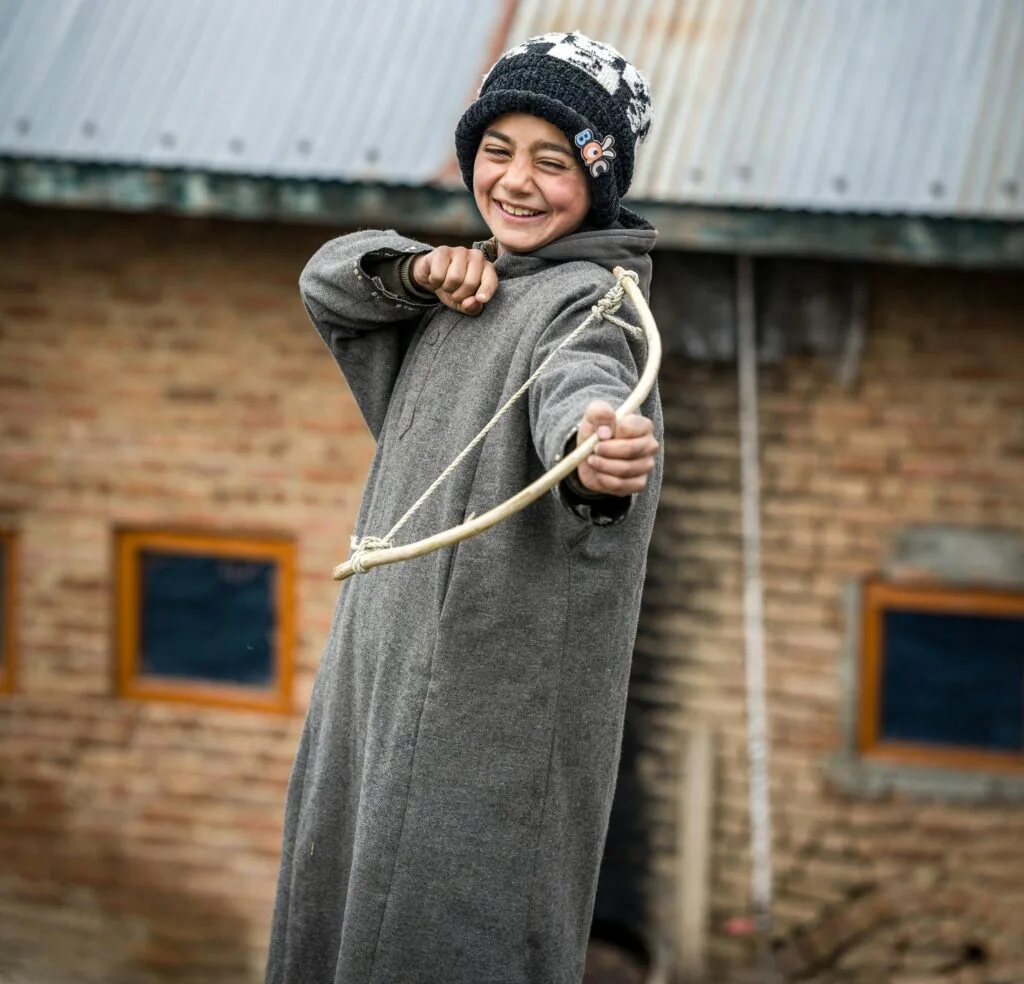
The pheran is worn with a kangri in winter. Kangri is an earthen pot filled with hot charcoal. It is kept under the pheran. So, it’s like a personal heater. And you can even move in snow.
This basic mix formed the culture of Kashmir. For instance, families gather and sit together in winter rooms made of wool called “hamams. Plus, they drink noon chai or kahwa in their pherans. Hence, the clothing is regarded as an item of social attachment.
Downtown Srinagar’s Hamam Culture
In downtown Srinagar, old houses are still fitted with traditional hamams. One such family at Zaina Kadal, which still preserves this old tradition, is that of Mir. On winter nights, they huddle together on the warm floor. Moreover, everyone wears a pheran. Guests are also offered one.
Members of the Mir family told a local journalist in 2022 that the pheran preserves culture. Without it, the winter table seems bare. So it’s not just threads. It is emotional security.
Weddings and Rituals
The wedding pheran is, however, a horse of a different colour. Bridal pherans are heavily embroidered. And they work gold efforts in tilla on it. There is also richer fabric, typically velvet or fine wool.
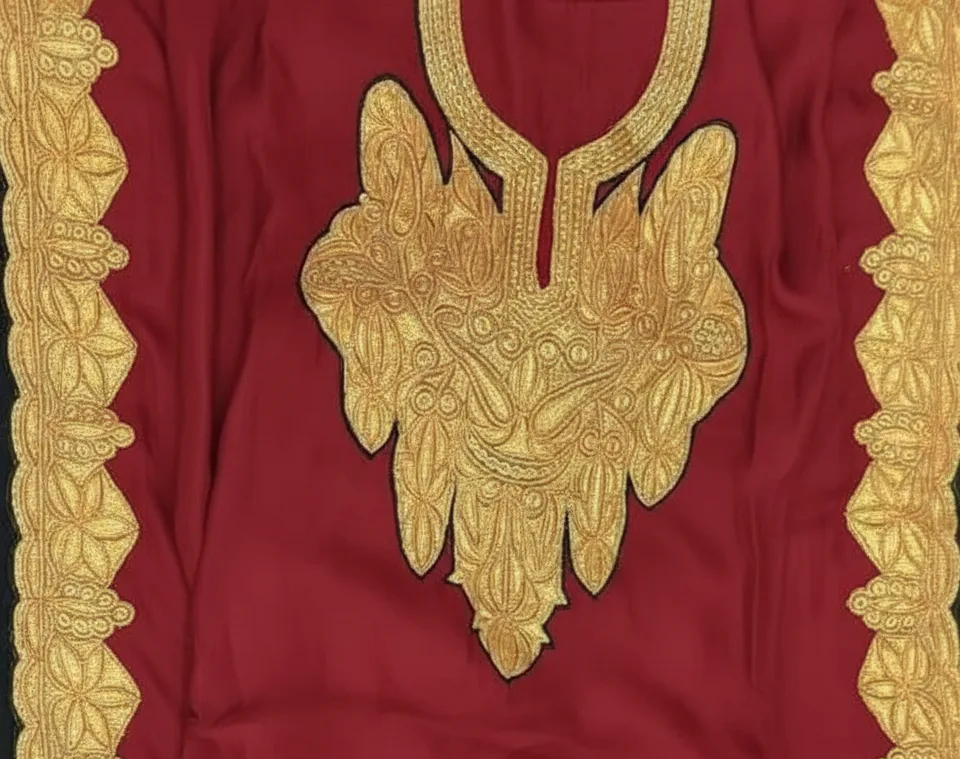
The pheran is transformed from a survival suit to ceremonial dress. It adapts to context.
Types of Kashmiri Pherans Explained
Not all pherans are the same. Material, cut, embroidered pattern plus season determine the variety.
1. Winter Wool Pheran
This is the classic version. It is made of thick wool. Plus, it’s made to be heat trapping. The cut is wide and long.
Men’s versions are usually plain. Yet, women’s kurtas can have delicate embroidery around the neck.
For December and January, here’s the optimal iteration. So it is most prevalent in the chilliest months.
2. Summer Pheran
Yes, there is a summer variety. It is lighter. Plus, it’s cotton or lightweight blends.
Summer pherans are also liked by older women in the rural areas. Plus they are comfortable for every day use.
3. Tilla Embroidered Pheran
Tilla embroidery uses metallic threads. Moreover, it is time-consuming. Also, it requires skilled artisans.
These pherans are expensive. Hence, they are also worn on weddings and festivals.
Real Case Study: Tilla Artisan in Anantnag
Name of the Artisan: Ghulam Qadir Gurwat LOCATION The village named Gurwa is a serene dwellers inhabited by more than 1200 households.
In the district of Anantnag, Yousuf Dar is a craftsman who has been into tilla work for 25 years. He inherited the skill from his father. And he learned it from his father, who in turn learned it from his grandfather.
In 2015, business was slow. Machine embroidery started dominating markets. As a result, the hand tilla work declined.
Yet, in 2021, Instagram boutiques started selling genuine Kashmiri wear. Therefore, demand returned. Today Yousuf sells bridal pherans to e-tailers throughout India. His earnings, too, more than doubled from 2016.
This is evidence, then, of how digital platforms revitalized traditional work.
4. Modern Designer Pheran
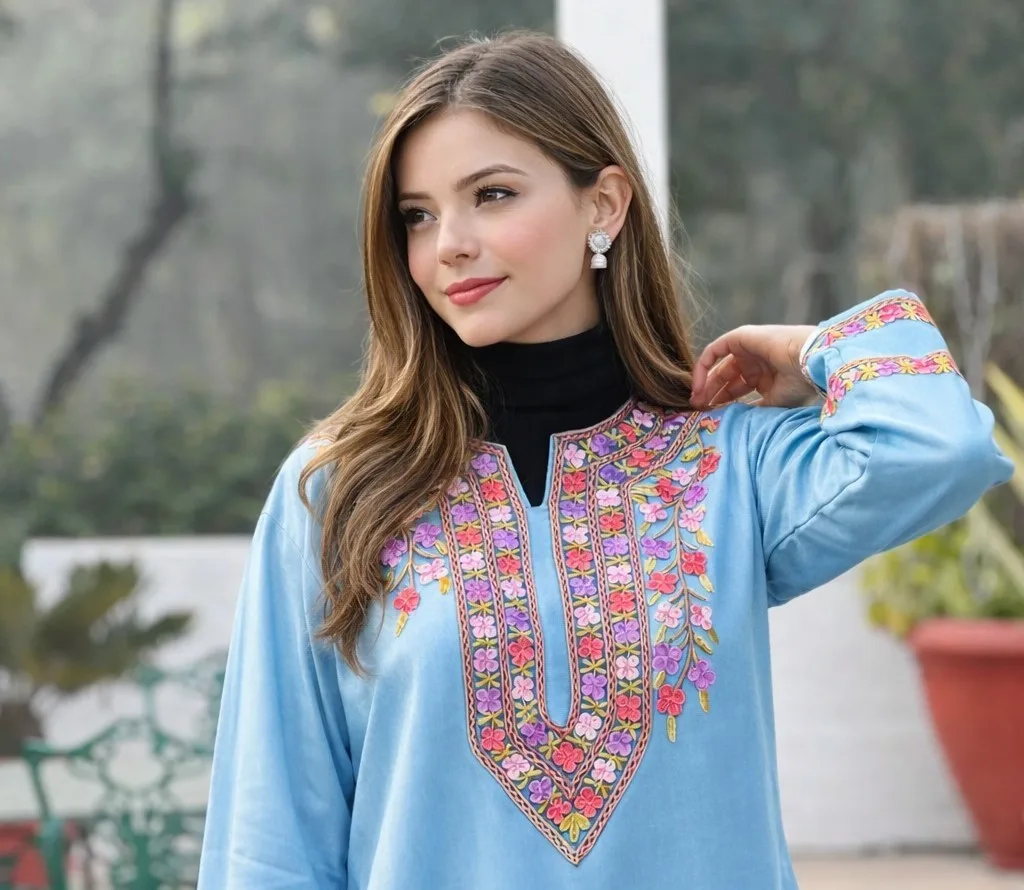
Designers are experimenting. Moreover, they shorten the length. They belt it and they add structure in the sleeves also.
Kashmiri designers in Delhi and Mumbai are rebranding the pheran as fusion wear. So now it’s crossing over into Indian mainstream fashion.”
In reality, designer pheran-inspired silhouettes have even dominated the runways and stages of brand-inspired events, such as those hosted by Lakme Fashion Week. But the modding is adamantly opposed by purists.
Still, evolution is natural.
The Craft of the Kashmiri Pheran
The making process matters. It also influences quality and price.
Fabric Selection
The wool used in traditional pherans is sourced from local sheep. But today many rely on imports.
Pashmina versions are rare. Also, they are costly. Therefore, they target luxury markets.
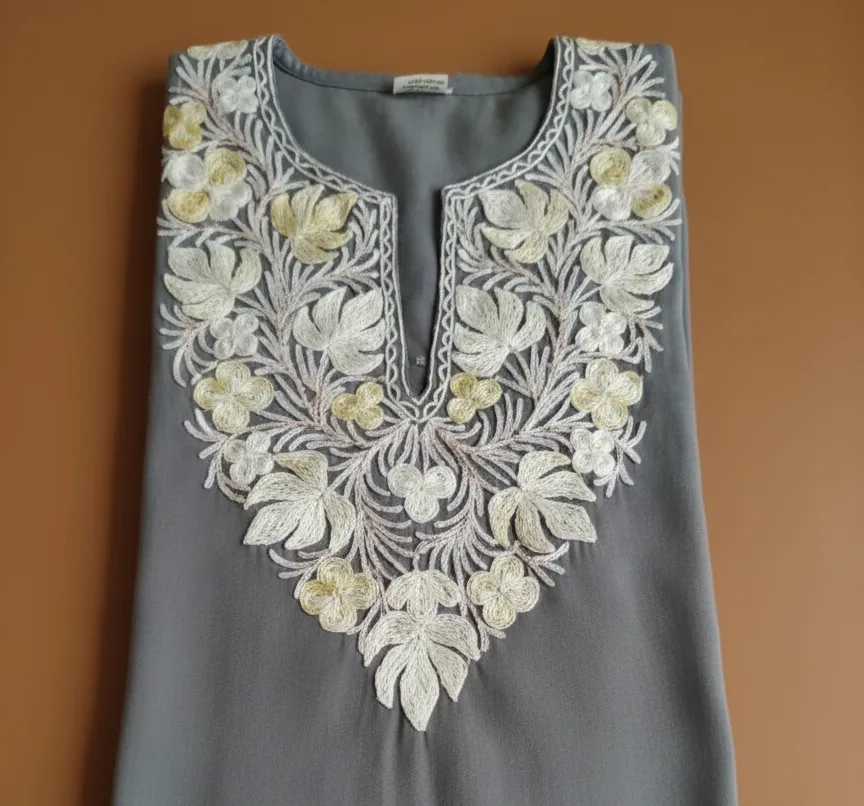
Embroidery Techniques
Common techniques include:
- Sozni
- Tilla
- Aari
Sozni is delicate. Moreover, it is done by hand. So, constructing a single piece takes weeks.
Aari work is done using a hooked needle. Also, it allows faster detailing.
Women Self Help Group in Budgam District
In Budgam, a women’s self-help group took up the production of embroidered pherans in 2018. Initially, they sold only locally. However, margins were low.
Last year they teamed up with an nongovernmental organization to sell through online retailers. So they went after customers in Bangalore, Mumbai and Hyderabad.
Two years later their sales had grown by 60 percent. They also went on to hire five women.
This is a case of when the traditional can keep pace with the digital as well.
Economic Significance of the Pheran trade
The pheran employs the tailors, wool merchants, dyers and embroiders and the retailers. So, it does establish a value chain.
In the winter, shops all over Lal Chowk are full of pherans. Beyond this, tourists buy them as mementoes.
Tourism Impact
Tourists who come to Kashmir Valley also purchace pherans for a local experience. Oh, and photographers move them around in snow shoots.
Sales of winter apparel rebounded in 2022 as tourism returned. And local traders saw a robust rebound.
Challenges
However, challenges exist.
- Machine-made versions outside the valley are very inexpensive
- Rising wool costs
- Political instability affecting tourism
And climate is changing winters. If winters are shorter, demand patterns could change.
Pheran in Popular Culture
The movies and television are partly to blame. It is some money for a film of characters roaming the passages of Kashmiri landscape while sporting pherans. Hence, it becomes visual shorthand for what’s real.
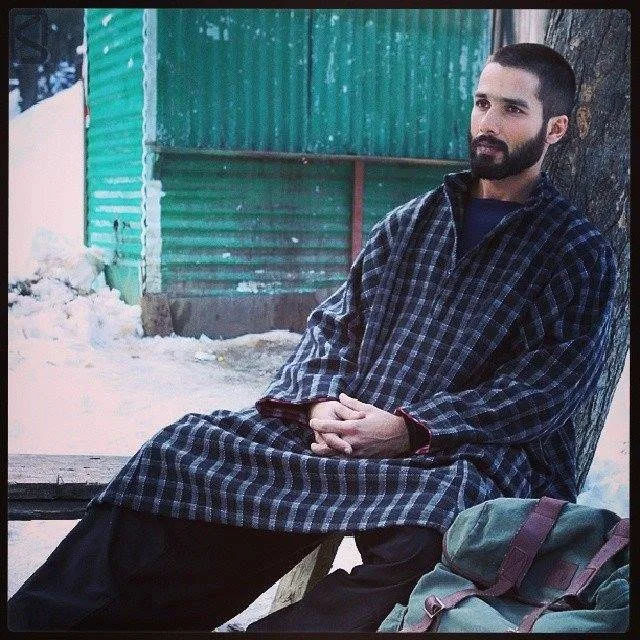
For instance, sequences filmed around Dal Lake will often feature locals attired in pherans (usually for winter). Moreover, it adds realism.
Pherans now are being worn with modern accessories and boots, in a bid to stylize social media influencers. That’s the reason younger audiences consider it hip, not retro.
How to select the best Kashmiri pheran?
Buying a pheran requires attention.
- Check fabric thickness. So be sure it’s appropriate to your climate.
- Inspect embroidery from the inside. And my handwork has visible threads.
- Ask about origin. Also, check to see whether it is made locally.
- Compare pricing across stores. Therefore, avoid overpaying.
If purchasing online, ask for close-up images. Moreover, read reviews carefully.
Care and Maintenance
Wool pherans require proper storage. So, do not store them in a humid environment.
Use mild detergent. Moreover, avoid machine drying.
Keep aside with neem leaves to avoid the moths. Also, air them occasionally.
Proper care increases lifespan significantly.
Why the Kashmiri Pheran Is Still a Political Statement Today?
Fast fashion is the trend of the world. But the pheran is anything but fast fashion. Moreover, it carries generational skills.
In a time of synthetic jackets, people still like pherans inside homes. Therefore, comfort beats trend.
Young entrepreneurs are building D2C brands around Kashmiri wear. Also, they highlight artisan stories. Therefore, storytelling drives value.
The pheran is also a sustainable product when it is produced locally. Not only that, natural fibers are less of a burden on the environment than synthetics.
Final Thoughts
The Kashmiri Pheran is rich with layers of meaning. It protects from harsh winters. Moreover, it connects families. Also, it sustains livelihoods.
It adapts. Therefore, it survives.
From the hamams of old Srinagar homes to Instagram boutiques shipping nationwide, the pheran has transformed without shedding its spirit. And the Kashmiris remained a symbol, and are still.
If you wish to understand Kashmir, begin with its winters. Then notice what people are wearing. You’ll see history embroidered into every pleat.
The Kashmiri Pheran will not fade away. Instead, it is transforming. Its tale is still yet to be told.
FAQs related to “Kashmiri Pheran”
It is a traditional loose woolen garment worn in Kashmir, especially during winter.
Both men and women wear it. Moreover, children and elders wear it too.
No. However, winter versions are thicker, while summer versions are lighter.
Usually wool. Also, cotton and blends are used for lighter versions.
A kangri is a small earthen fire pot kept under the pheran for warmth.
It is widely worn in the Kashmir Valley.
Yes. Many historians trace its evolution to influences during the Mughal Empire.
Yes. Women’s versions often include embroidery, while men’s are usually simpler.
It is metallic thread embroidery used for festive pherans.
Yes. Bridal pherans are heavily embroidered and ceremonial.
Yes. Many buy them as souvenirs when visiting Srinagar.
Prices vary. Hand-embroidered versions cost more.
It can take weeks, depending on the design.
Yes. Moreover, modern designers have made it trendy again.
Yes. However, they are most practical in cold climates.
Traditional wool versions are relatively sustainable compared to synthetic jackets.
Use mild detergent. Moreover, avoid harsh machine drying.
Yes. Its basic design works for all genders.
Yes. Designers shorten lengths and add contemporary elements.
It is fine needlework done by hand on traditional garments.
Many artisans work in areas like Anantnag and surrounding districts.
Yes. In fact, they are commonly worn inside homes during winter.
It allows air insulation. Also, it creates space for a kangri.
Because it represents survival, heritage, and Kashmiri identity.
Yes. Moreover, many designers pair it with jeans, boots, and belts to create a contemporary look while keeping its traditional essence.
Comments